The Science Behind Drilling Deeper and Faster
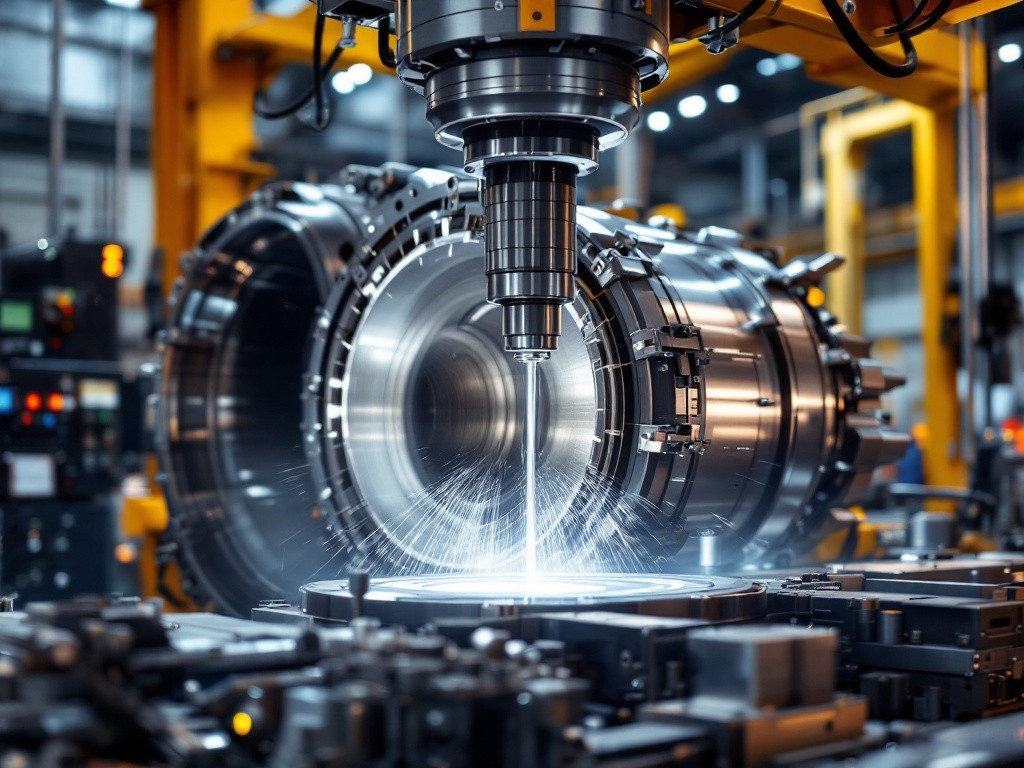
Drilling might seem simple-just a spinning tool cutting into a surface-but when it comes to deep-hole drilling, things get way more complicated. Unlike regular drilling, which only makes shallow holes, deep hole drilling is all about precision, depth, and efficiency. Industries like aerospace, automotive, and energy depend on it to create strong, accurate, and reliable parts.
But how do you drill deep without breaking tools or slowing down? What makes deep hole drilling different from regular drilling? Let’s break down the science behind drilling deeper and faster.
Why Deep Hole Drilling is Different
If you’ve ever used a regular drill, you know that making a hole isn’t too hard. But what if that hole needs to be super deep, perfectly straight, and extremely precise? That’s where deep hole drilling comes in.
Deep hole drilling is used when a hole needs to be much longer than its diameter-typically at least 10 times deeper than it is wide. Some industries need holes that are 100 times deeper than their diameter! Making holes like this without the drill overheating, breaking, or going off-course is a serious challenge.
Unlike regular drilling, deep hole drilling requires:
- Specialized drill bits that can handle extreme depths.
- Coolant and lubrication systems to prevent overheating.
- High-precision machines that keep the drill perfectly aligned.
Without the right technology, the drill bit could snap, the hole could go off track, or the process could take way too long.
How Engineers Drill Deeper Without Breaking Tools
One of the biggest problems with deep hole drilling is heat and friction. When you drill into metal, the cutting action creates intense heat. If this heat isn’t controlled, the drill bit will wear out fast or even break inside the hole-ruining the entire part.
To prevent this, engineers use a coolant system that pumps fluids directly through the drill. This helps in three ways:
- Keeps the drill bit cool so it doesn’t overheat.
- Removes metal chips so they don’t clog the hole.
- Lubricates the drill to reduce friction and wear.
The type of coolant used depends on the material being drilled. For metals like steel or titanium, high-pressure oil-based coolants work best because they reduce heat and prevent chips from getting stuck.
Another key factor is tool geometry. The shape of the drill bit affects how efficiently it cuts and removes material. Engineers design drill bits with special grooves (called flutes) to help push metal chips out of the hole while keeping the drill straight.
Machines That Make Deep Hole Drilling Faster
Drilling a deep hole isn’t just about having a strong drill bit-it also depends on using the right machines. There are two main types of deep hole drilling machines:
- Gun Drilling Machines
- Used for small-diameter, high-precision holes.
- Common in industries like medical devices, aerospace, and firearms.
- Uses a single cutting edge with coolant flowing through the center of the drill.
- BTA Drilling Machines
- Used for larger-diameter holes that need to be extremely deep.
- Works by pushing coolant through the outside of the drill bit while pulling metal chips out through the center.
- Faster and more efficient for large-scale industrial drilling.
Both types of machines are designed to keep the drill perfectly aligned. Even the smallest misalignment can cause the hole to drift off course, ruining the entire part.
How Automation is Making Drilling Even Faster
Modern deep hole drilling isn’t just about better drill bits and machines-it’s also about automation. New technologies are helping companies drill deeper, faster, and with more accuracy than ever before.
- CNC (Computer Numerical Control) Systems
Instead of relying on human operators, CNC machines control the drilling process with extreme precision. These machines follow pre-programmed instructions, ensuring that every hole is drilled exactly the same way every time.
- Smart Sensors and AI Monitoring
Some advanced drilling machines use sensors and AI to monitor the process in real time. If the machine detects too much heat, vibration, or tool wear, it can automatically adjust speed, pressure, or coolant flow to prevent damage.
- High-Speed Drilling Techniques
New cutting techniques, like peck drilling (where the drill moves in and out to remove chips) and vibration-assisted drilling (where tiny vibrations reduce friction), are making deep hole drilling faster and more efficient.
These innovations mean that industries can drill more holes, in less time, with fewer mistakes-saving time and money.
Where Deep Hole Drilling is Used
Deep hole drilling is crucial in many industries. Some of the most important uses include:
- Aerospace – Drilling precise holes in airplane wings, engines, and landing gear.
- Automotive – Creating engine blocks, fuel injectors, and transmission parts.
- Medical Devices – Producing surgical tools and implants that require extreme accuracy.
- Oil & Gas – Drilling deep holes for pipelines, valves, and drilling rigs. This is where experienced service providers like Renegade Services play a key role, offering advanced energy solutions and downhole technologies to support efficient and accurate drilling operations.
No matter the industry, the goal is the same: drill deep, drill fast, and keep the process as accurate as possible.
Final Thoughts
Deep hole drilling helps create strong, precise parts for cars, airplanes, and medical tools. As technology improves, drilling will become even faster and more accurate, making manufacturing more efficient. It’s a process most people don’t think about, but it plays a big role in everyday life.

Post Comment