Evolution of Protection in Modern Motorsport
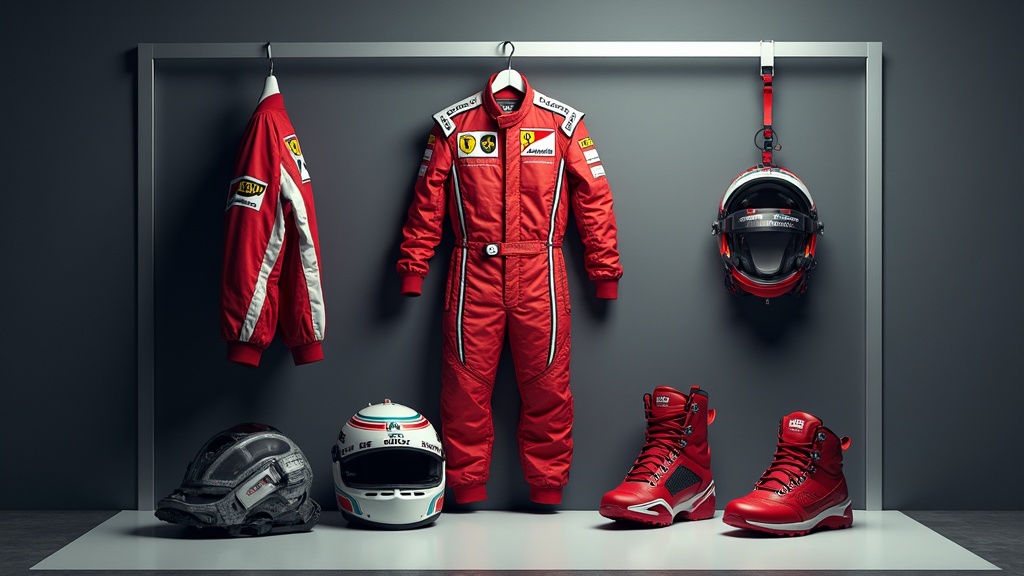
Evolution of Protection in Modern Motorsport
Motorsport has always been dangerous, but the level of protection available to drivers today would seem almost miraculous to racers from a few decades ago. Looking back at old racing footage can be genuinely shocking – drivers in cotton overalls, basic helmets that wouldn’t pass muster for a bicycle ride now, and cars with virtually no safety features beyond a lap belt. The transformation in safety equipment hasn’t happened by accident. It’s come through hard-won lessons, rigorous testing, and genuine advances in materials science and engineering.
One of the most impressive facets of these advancements is that they’ve made racing much safer without making it any less immersive and engaging for the driver in question. Cars today wear safety devices like no big deal, benefiting from protective materials which are much lighter, comfortable and non-restrictive than what was standard even ten years ago. Instead, regulations and manufacturers have learned what racers require through research and responsibility to remain one step ahead for the best possible racing experience.
Helmets and Head Protection
One of the areas in which motorsport safety has advanced substantially is in the helmet. The style of helmet that racers once donned would be very familiar to a construction worker. Today’s helmets are incredible marvels in multi-directional impact and energy dispersion, while being lightweight but concurrently considering heat dispersion and visibility.
The materials alone represent huge advances. Carbon fiber shells provide incredible strength at lower weights than older fiberglass or polycarbonate designs. Multi-density foam liners absorb impact forces more effectively by crushing in controlled ways. Advanced options such as Schuberth racing helmets incorporate technologies developed through extensive testing and real-world racing feedback, though there are numerous quality manufacturers pushing helmet technology forward across different price points.
Ventilation systems work remarkably better, too. In the past, a racing helmet with great padding turned into a sauna halfway through the race with mental fatigue applying just as much stress as physical stress. Modern designs position vents to suit airflow without compromising the integrity of the helmet. While it may sound trivial, comfort allows for concentration and concentration is highly valuable at 190 MPH.
Fire Protection
The suit has changed just as much as the helmet, with much the same principle in mind—remove driver from proximity to flames—but how that occurs has changed substantially. Once upon a time, gloves and suits were made of fire-retardant heavy material that was as stiff as it was obnoxious. It worked to buy someone time in a fire but failed to accommodate natural driving needs.
Current materials boast a winning combination where even though they’re made thinner than before to accommodate mobility, they’re still stronger than ever in layering. Suits are now multi-layer fabrics with the outer layer resisting heat and flames while the insides provide thermal insulation. They breathe better to adapt to moisture loss and heat creation during a normal race while still providing adequate protection during an emergency.
They’re certifiably stronger than ever before as well. Compliance standards have become increasingly stringent as well, propelling manufacturers to create better products through materials and stitching techniques. What was acceptable twenty years ago wouldn’t pass FIA standards today and with every generation of requirements comes incremental improvements instead of arbitrary moving goalposts.
The HANS Device
Perhaps one of the greatest inventions stemming from motorsport safety—and safety in general—in recent years occurred when scientists discovered where injuries were coming from after crashes. For decades, it was assumed that impacts were the leading cause of injuries. Research revealed that slamming on breaks caused an extreme head-whiplash forward and sideways that was driving people to a permanent standstill.
The HANS (Head And Neck Support) Device is a miracle of simplicity that restricts head movement yet allows driver movement during regular use, decreasing neck loading during crashes. Since HANS became a mandatory solution across most levels of racing, it almost immediately limited serious injuries.
What makes HANS revolutionary compared to other devices is how quickly drivers adapted to it on their own. Many feared limited dynamic capability, however, within a week of racing with HANS, people came to appreciate and embrace its design like it was a seatbelt, and modern drivers wouldn’t think twice about lacking one.
Beyond Individualized Equipment
It’s not just what drivers wear that’s gotten safer. Racing cages provide improved security and support, harnesses help dissipate loads better, cockpit surrounds utilize impact absorbing platforms and even how marshals respond to incidents have improved with better resources and training.
They function in concert rather than in isolation. A HANS device relies on appropriate spots on the helmet and determined seat placement. Racing suits take skin-tight undergarments into consideration. It’s not just one aspect that’s an improved solution but rather today’s racing world champions rely on integrated systems where one option supports another.
The methods behind testing what’s possible have gotten better, too. Crash test facilities can replicate certain accident scenarios exclusive to racing which help manufacturers create integrated solutions before they’re ever tested on a track which reduces error exponentially compared to the trial-and-error way of the prior era.
The Future
Safe technology continues to advance. Smart helmets with integrated sensors; materials that become more proactive upon impact; biometric regulatory systems either in use or being tested can work amazing wonders at professional levels and ultimately filter down to club racers and track day enthusiasts.
The remarkable achievement is making all this protection work without compromising what makes racing appealing. Drivers still feel connected to their cars, competition remains intense, and the experience hasn’t been sanitized into something unrecognizable. Racing is safer today than ever before while remaining the challenging, engaging sport that attracts people in the first place.


