The Surprising Reality of Driving Restrictions After a License Suspension
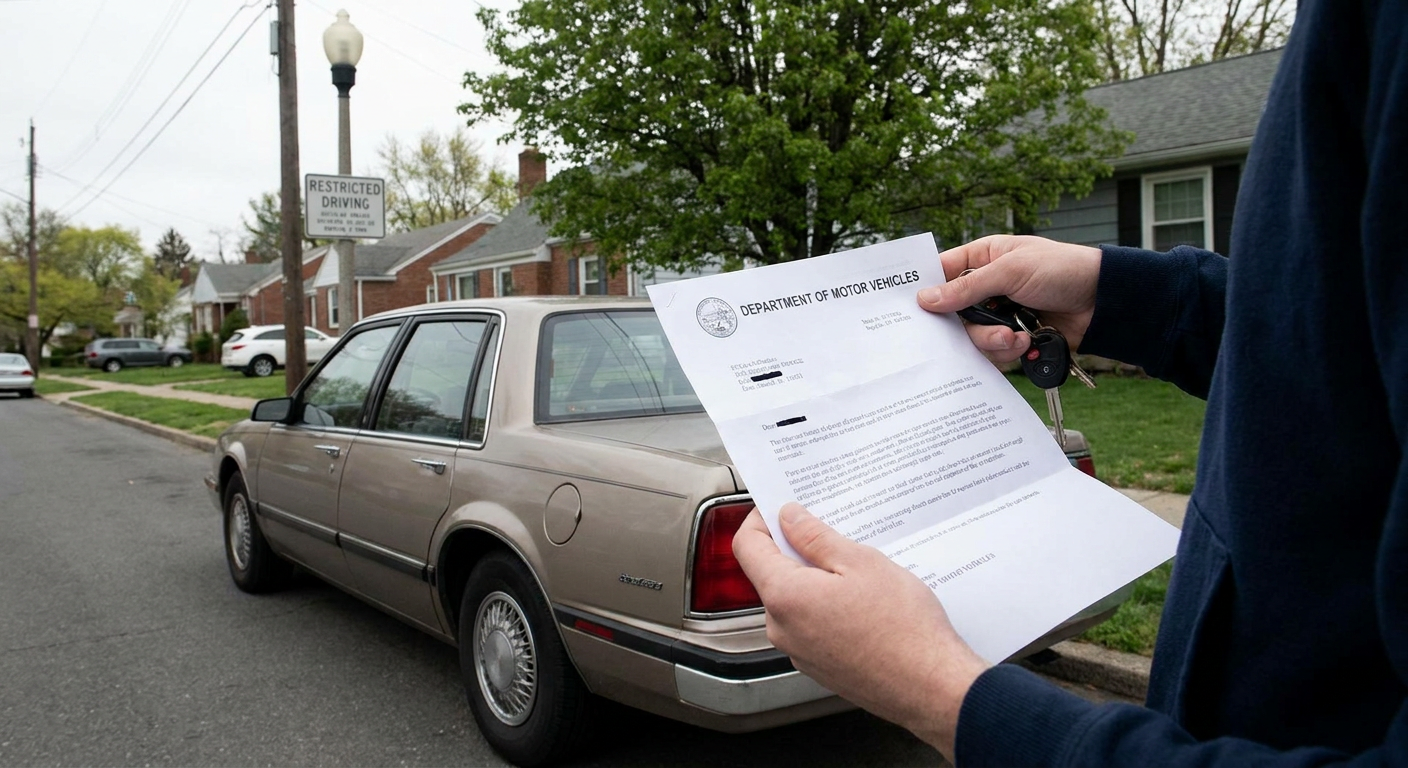
Many of us incorrectly assume that having a suspended or revoked driver’s license means we can’t drive for the duration. In California, the DMV has a series of restricted driver’s licenses that give people the ability to drive under specific circumstances. There are various reasons a person could have their driver’s license suspended or revoked, and it’s not just about accruing too many moving violation points. This is why it is important to know your rights – and how to protect them!
A suspension isn’t always a total ban
There are multiple types of license suspensions and the paths to reinstatement vary on what led to the suspension. A DUI suspension isn’t the same suspension you’d get for piling up too many California DMV points on your driving record, or for an at-fault accident while uninsured. Each suspension has its own set of timelines and specific requirements.
However, most will qualify for a temporary, restricted license. This isn’t a hardship license or a loophole – it’s an official, formal program the DMV has had for decades to prevent unnecessary economic hardship on a person’s livelihood like job loss. In fact, if they didn’t have it, we could help you apply for a 16054 waiver. The purpose of the restricted license is narrowly tailored and defined. The most common need is transportation to and from work. Public transportation or carpooling here in California (for example, in San Francisco or in Los Angeles) is not an adequate defense or a reason. Other reasons the California DMV may give you a restricted license includes school, medical appointments, or DUI program classes.
What a DUI suspension actually requires
If your license was suspended due to a DUI, usually the restricted license includes the ignition interlock device (IID) requirement and the SR-22 insurance filing for three years. Many people mistakenly think that SR-22 is a type of insurance. It’s not, it’s only the certificate that your insurance company sends to the DMV in Sacramento notifying them that you have the legally required amount of coverage. It’s simply a guarantee that your vehicle is properly insured. If SR-22 insurance lapses during those three years in California, your insurance company must report it to DMV and your license will be suspended again.
The problem nobody explains: what if you don’t own a car?
This is where many people get confused. Most of the drivers in this situation don’t actually have a car in their name. They might have lost their vehicle to the bank, they might have never had one, they might be using a buddy’s car to get to work or renting one to drive while they’re on a restricted license. Because the typical car insurance policy assumes ownership of the car it’s based on, if there’s no car titled in your name, where does the SR-22 come from?
There are special, often more expensive, high-risk Non-Owner SR-22 policies designed to deliver the state-required coverage while not actually being tied to a vehicle. They formally exclude coverage on damage to whatever car you’re driving, which is fine with the state since the purpose is to make sure you have the legal minimum required liability insurance limits. If you’re driving a buddy’s car, and you hit another car, this insurance will cover the person in the other car’s medical bills and car repairs up to the policy limit. It won’t pay to fix the car you were driving, and it won’t cover your own medical bills. Of course, these are reported to the state.
Where people get burned
The combination of the restricted license and the SR-22 is a pretty good incentive to stay insured, but everything has to work exactly as designed. If one piece slips, there’s a high likelihood the others will follow, then a license suspension. And after that, many will drive anyway. A 2019 study found that crashed, suspended (or revoked) drivers were more than twice as likely as other drivers to have been in a previous crash.
The restricted license is a privilege, not a workaround
Treat the restricted license for what it is, a narrow legal exception with teeth behind it. Fulfill your 3-year SR-22 without fail, know exactly what you can expect from your non-owner policy, and don’t stray beyond the lines of what the restriction allows. The system makes it possible for people who’ve lost their license to continue working and leading their lives. It just doesn’t forgive those who believe they can get away with pushing its limits.